Before September came to an end, Caroline Garcia headed to the sidelines, her season was over…
The 30-year-old admitted having had right shoulder issues throughout 2024 and that “playing and healing” hadn’t worked. She finished Instagram her post poignantly. “I’m exhausted from the anxiety, the panic attacks, the tears before matches…. I’m tired of living in a world where my worth is measured by last week’s results, my ranking, or my unforced errors.”
Last year, the 2016 and ’22 Roland Garros doubles winner with French compatriot Kristina Mladenovic openly discussed how a foot injury had resulted in her singles ranking tumbling… Which brought about bulimia nervosa. The 2022 Women’s Tennis Association Year-End champion recovered from the eating disorder but had another challenging competitive campaign this year.
Playing tennis on any level can be immensely rewarding. It can also be bruising both physically and mentally. Showing a weakness, whether it is a shaky second serve or not having the confidence to finish a match, not only affects the outcome but, far worse, it can be psychologically damaging. Simplistically, it is the reason tennis players, in the past, rarely discussed mental health.
In 2021, that mindset changed dramatically… Naomi Osaka became the game’s “Mental Health” standard bearer after withdrawing from a second round match at Roland Garros.
Prior to the tournament, Osaka had released a statement on her social media platforms that she would not be doing press conferences. Following her first round victory over Patricia Maria Tig of Romania she stuck by that statement.
Tournament officials, along with the ITF marched, in step and did what they only knew how to do. They played by the rules… And fined her $15,000. In a show of unity, the other majors threatened sanctions…
Anxious media members, rather than realize that the talented yet shy 2021 Australian Open champion (which was the fourth major singles title of her career) was struggling with some challenging issues, took her refusal to chat as if they had been abandoned…
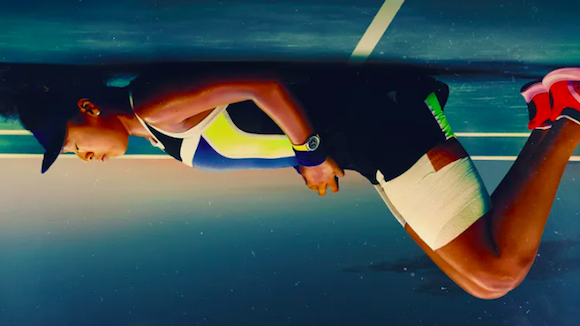
Leaving Paris, Osaka explained that she had been dealing with anxiety for some time. Later, she added further insight, admitting that since 2018 she had been coping with depression.
Using 2018 as a benchmark was thought provoking… That is when Osaka won the US Open Women’s Singles for the first time and was almost apologetic for having done so… That was because of Serena Williams’ “I am not a cheat…” performance in the final. Supported by a raucous crowd, she castigated Chair Umpire Carlos Ramos, who had warned her for receiving hand signals from her coach Patrick Mouratoglou (which later he admitted doing). Sadly, the finalist tarnished a telling display of shot making by the winner, which caused Osaka to say that the victory was “bittersweet”. Even worse, what should have been remembered as a first Grand Slam victory was blemished by “it wasn’t the happiest moment…”
Osaka was not the first player to be consumed by uncertainty, and the “Need To Step Away…”
Rebecca Marino, Canada’s Female Player of the Year in 2010 and ’11, was driven from the game by cyberbullying in February 2013. She escaped by studying English literature at the University of British Columbia and becoming a member of the rowing team.
In 2016, Madison Keys, a victim of cyberbullying, teamed with FearlesslyGiRL, the organization designed to help young women contend with online viciousness, and a year later was able to play her way into the US Open Women’s Singles final.
Prior to Osaka’s Roland Garros departure, Mardy Fish made headlines in 2012. He was about to play “The Mardy Fish Match.”
As he explained in The Players’ Tribune in 2015, “I am hours away from playing in the biggest tennis match of my life: the fourth round of the U.S. Open… on Labor Day… on my dad’s birthday… on Arthur Ashe… on CBS… against Roger Federer.
“I am hours away from playing the greatest player of all time, for a chance at my best- ever result, in my favorite tournament in the world.
“I am hours away from playing the match that you work for, that you sacrifice for, for an entire career.
“And I can’t do it.
“I literally can’t do it.
“It’s early afternoon; I’m in the transportation car on my way to the courts.
“And I am having an anxiety attack.”
“My wife (Stacey Gardner) is asking me…What can we do? What can we do? How can we make this better?
“And I tell her the truth:
“The only thing that makes me feel better right now… is the idea of not playing this match.”
Being completely supportive and realizing the enormity of what he was saying, Gardner calmly replied “Well, then, you shouldn’t play. You don’t have to play. Just… don’t play.” So, Fish gave Federer a walkover.
Barbora Krejčíková of the Czech Republic, this year’s Ladies’ Singles titlist at The Championships, revealed that prior to winning the 2021 Roland Garros Women’s Singles, she needed to talk with her psychologist, during the season, to overcome a panic attack that made it impossible for her to leave the locker room.
Mihaela Buzărnescu, the former Romanian player, had an injury plagued career. Taking time off to recover from two knee surgeries, she earned a Sports Science Ph.D. She explained to AP, “There’s a lot of pressure. I felt it when I was No. 20 in the world. I felt it when I broke my ankle and came back, and I had (ranking) points to defend and people expected me to have the same results as before and I wasn’t… I was depressed. (When) my ranking went in one week from 55 to 135, I wasn’t able to go out of the hotel room for a couple of days.”
Currently, players can take advantage of the mental guardrails that have been made available. Often, their “teams” provide needed support. But since Osaka, the ATP and WTA, along with many tournaments, have established programs to help players manage anxiety.
In the old days, that wasn’t the case. There were players who were “Different”… And they were categorized as “Eccentric” and simply allowed, (forced may be a more appropriate word to use), to “Play on…”
Krejčíková and Buzărnescu’s recollections bring to mind an Art Larsen story…
During the 1950s, it seems, he was having trouble getting out of his locker at Forest Hills because a coat hanger was supposedly stuck in the back of the tennis shirt he was wearing… and it wouldn’t allow him to turn around and leave the cubicle. In desperation, he called to Tony Trabert, who was also in the locker room, for help… Trabert rescued him… And he was able to escape and go play his match.
Larsen grew up in San Leandro, California, played junior tennis in the area and after high school joined the US Army at 18. He survived the WWII Normandy landing at Omaha Beach and the Battle for Brest in Brittany. In the first encounter he was one of the few who remained alive; in the second most of his company was killed.
Though uninjured he returned home “Shell-Shocked” (which was the term used in those days) … A doctor suggested to relieve his stress he should begin playing tennis again. He did… but his battlefield experiences left him with a collection of idiosyncrasies. Each day, for good luck, he would tap things a set number of times… (and “Tappy” became his nickname.) He would regularly talk to an eagle that perched on his shoulder and provide matching playing “tips…” He avoided stepping on the court lines.
His training approach was consistent…He smoked, drank and partied until the wee hours of the morning… and would play incredibly well the next day. He won the 1950 US National Championships Men’s Singles (now the US Open) at Forest Hills and was ranked No. 1 in the US. He was the US first man to win all the national titles (on clay, grass, hardcourt and indoors). In 1954, he was a finalist to Trabert at Roland Garros.
Larsen once said he was “A year-round nervous wreck”, and admitted, “All my buddies got killed around me in Europe and you don’t forget things like that. It’s a change-over from the fear of getting killed to the fear of losing.”
In “Last Tap”, December 12, 2012, Steve Tignor, used a quote from Gordon Forbes, who wrote the acclaimed “A Handful of Summers” to describe Larsen… “A natural left-handed player of almost uncanny ability…” said Forbes, who claimed that tennis in the 1950s was so chock full of oddballs that he came to believe that “To reach the top of the game, you had to be slightly touched…”
An international competitor when Larsen played, the South African added. “He had that rare gift enjoyed by only a very few tennis players – a perfect touch, a feel for the ball, an inner knowledge of exactly what was going on between the strings of his racquet and the cloth attached to the rubber inside of the ball.”
When Iga Świątek of Poland won the 2020 COVID-19 September rescheduled Roland Garros title, her surprise first victory in Paris received as much attention as the fact that Sports Psychologist Daria Abramowicz was a vital member of her team.
Osaka’s “Truth telling candor” in Paris was a prelude to Naomi Osaka, the Netflix 2021 docuseries and its Break Point seasons of 2023-24.
In one Break Point episode, Nick Kyrgios of Australia, Maria Sakkari of Greece and Paula Badosa of Spain detailed the complexity of the mental health situations they faced on tour. Their openness was riveting… But the angst, resulting from a myriad of issues they faced, was more compelling.
Here is a synopsis of what they offered…
“The first four, five years of my career, it was just chaotic… I just had to be kinder to myself… For my mental health, I could never be a player that played all year round. I couldn’t do it.”
– Nick Kyrgios
“I just didn’t know how to handle that situation (losing to Krejčíková in the 2021 Roland Garros semifinals). I couldn’t sleep for three days. I was just lying in bed and trying to sleep, but I was so nervous and so sad. It was tough for me to handle, and I told my coaches that I want to retire from tennis.
“I retired for four days. I was on a Greek island, and I said, ‘Okay, when can we start practicing again? I’m coming back from retirement.’ That’s what we’ve been calling it.”
– Maria Sakkari
“I’ve been struggling for years with a lot of depression.
“People were talking about me like I was the next big thing, the next Maria Sharapova. I felt like, ‘Wow, now I have to be a legend. Maybe next year, I have to be a Top 10 player.’ So, for me, it was a lot of pressure.
“It was very tough for me (after winning the 2015 Roland Garros Junior Girls’ title) because I didn’t know what to do in that moment. Life didn’t have a lot of sense because ever since I was seven years old, my dream was to be a professional tennis player. It was very bad. I didn’t want to go on a tennis court. I started to try to find solutions to work on it, with mental health professionals.
“I’ve been very open in the press and everywhere about my mental health struggles because even the best athlete in the world can feel this. I’m in a position right now that if I can talk, I can help other people.
“A lot of people don’t talk about it because they feel they’re going to be weaker, but I think it’s totally the opposite. I’m fighting a lot mentally to try and find myself again.”
– Paula Badosa (in her Break Point segment she admitted discussing mental health issues publicly beginning in 2019)
Steve Johnson, as his career wound down (he retired at the 2024 BNP Paribas Open), talked about the affect the death of his father Steve Johnson, (May 11, 2017) had… “I’m somebody who has dealt with anxiety since my father’s passing, to the point where I couldn’t leave the house. I would be playing matches, and everything would be spinning out of control… My mom and people around me pleaded with me to get help. But I was the guy who says, ‘Eh, whatever. It’s just fine. Yada yada yada’. But I got help. I talk to a therapist quite frequently. It’s not weakness. You have no idea what somebody is going through unless you ask them.”
On Instagram in May 2023, Amanda Anisimova posted, “I’ve really been struggling with my mental health and burnout since the summer of 2022. It’s become unbearable being at tennis tournaments. At this point, my priority is my mental well-being and taking a break for some time. I’ve worked as hard as I could to push through it.”
As a 17-year-old, the American became “Known …” at Roland Garros in 2019. She defeated defending champion Simona Halep of Romania, 6-2, 6-4 in the Women’s Singles quarterfinals before losing to Ash Barty, the eventual tournament winner, 6-7, 6-3, 6-3 in the next round.
The Paris joy was extinguished a week before the US Open when Konstantin, her father, long-time coach and best friend, had a heart attack and passed away at 52.
A year later, in a 2020 New York Times interview, Anisimova said, “This is obviously the hardest thing I’ve had to go through and the hardest thing that’s ever happened to me, and I don’t really talk about it with anyone… The only thing that has helped me is just playing tennis and being on the court. That’s what makes me happy, and I know it would make him happy, so that’s the way it is.”
For seven months, Anisimova enjoyed being 21 as she explained to the WTA, “It was just nice to take a break from the chaotic lifestyle of a tennis player and reset as a human. I think that break and having more than two weeks off for the first time in my life was just very refreshing. I gained a lot of energy back in myself and happiness.
“I slowed my life down and that’s something that I really needed.”
Not being on a tennis court gave Anisimova an opportunity to explore painting, a creative skill she discovered in 2022.
She returned to competition “refreshed” in Australia this past January.
During the US Open, tennis was continually extolled as “The World’s Healthiest Sport.” Based on physical activity, it certainly is among those at the top of the list. Unfortunately, the marketing campaign neglected to examine the stress that accompanies playing what is supposed to be “A game…” (A fact that needs to be emphasized).
Stress will forever be a component of elite and recreational level play. Yet it is so nuanced that the game must continue to develop pragmatic methods to lessening player anxiety particularly on World Mental Health Day, October 10, 2024.
Borrowing from Václav Havel, “The tragedy of modern man is not that he knows less and less about the meaning of his own life, but that it bothers him less and less.”