Because they are Grand Slams, the four majors have a compendium of “Des Surprises…” final round outcomes that make them unique… Each – Australia, Roland-Garros, The Championships and the US –since WWII has had results that were unexpected.
The 127th Roland-Garros, May 25 to June 8 2025, has a history of customary champions with Rafael Nadal (14) and Chris Evert (7) topping the men’s and women’s all-time win lists.
This feature offers a “bien joué” (well played) to some of those who earned the ultimate prize… the men’s or women’s singles championship. Many were annual participants…others were in Paris on a few occasions. Some regularly contested for trophy honors… others were eye-opening, “Des Surprises.”
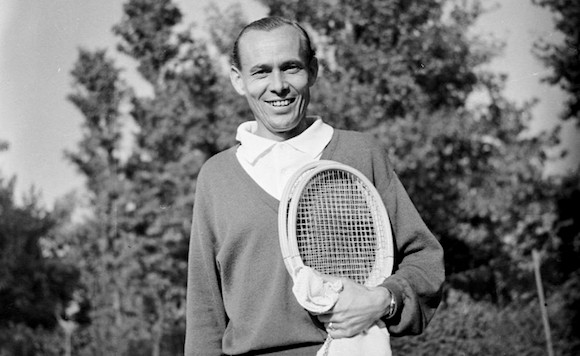
In 1947, József Asbóth defeated Eric Sturgess of South Africa, 8-6, 7-5, 6-4.
The Hungarian champion’s story is thematic… He played the tournament five times making his first Paris appearance in 1939… Which was the year he had been discovered by Henri Cochet who coached the Hungarian Davis Cup team.
The former Les Quatre Mousquetaires called him “Josie-boy” and like the Frenchman, Asbóth wore a short-sleeve white shirt and white pants when he competed. He was the first and is still the only man from Hungary to win a Grand Slam singles title. WWII, then the country’s Communist takeover restricted his tennis travel… which made it necessary for King Gustav V of Sweden to post a bond with the government insuring that Asbóth would return if permitted to play The Championships in 1948.
Not only did he play, but thanks to his talent (and the Royal assist), he upset Tom Brown of the US, 4-6, 6-3, 4-6, 6-1, 6-1 in the quarterfinals. Unfortunately, he injured an ankle… After the match, Harry Hopman, the respected Australian player/coach, supposedly told Asbóth “… grass is your element.” Hampered by his swollen ankle he gamely faced John Bromwich of Australia in the semifinals losing 6-3, 14-12, 6-2.
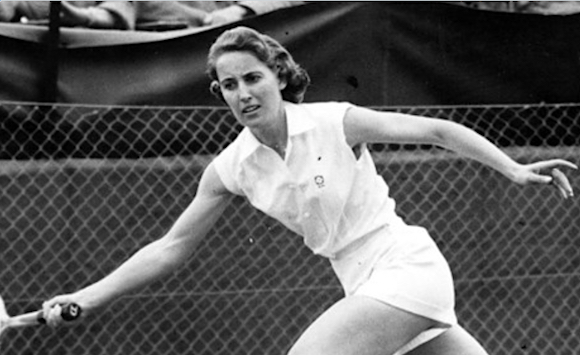
In 1955, Angela Mortimer launched the first (and only) every-other-year a British women is champion parade. Mortimer’s Roland-Garros record is unrivaled. She played the tournament only three times. The first in 1953 when she reached the third round. Her next outing took place two years later when she survived a 2-6, 7-5, 10-8 contest against Dorothy Head Knode of the US to take home the Women’s Singles trophy. In her third and final appearance a year later, she was a 6-0, 12-10 finalist to Althea Gibson.
In an “unheard of…” at the time Black-Jewish pairing, Gibson and Angela Buxton of Great Britain defeated Darlene Hard, also from the US, and Head Knode, 6-8, 8-6, 6-1 in the Roland-Garros Women’s Doubles final. (Gibson and Buxton continued their tennis ground-breaking, taking the Ladies Doubles at The Championships in 1956.)
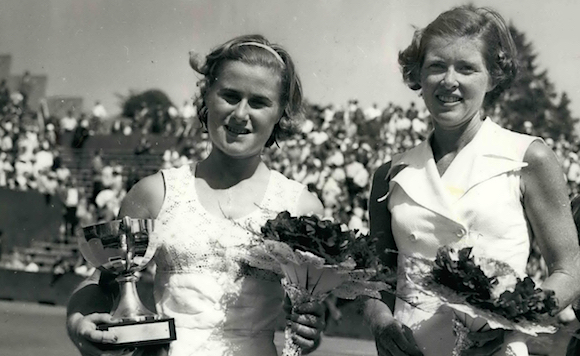
Shirley Bloomer was the next woman’s titlist from Great Britain. In the fourth of her six Roland-Garros appearances, after being a quarterfinalist in 1955 and ’56, she thumped Head Knode, 6-1, 6-3, in the 1957 title round. The same year she teamed with Hard to edge Yola Ramírez and Rosie Reyes of Mexico 7-5, 4-6, 7-5 for Women’s Doubles honors.
In 1958, Bloomer teamed with Nicola Pietrangeli of Italy, who would go on to claim the 1959 and ’60 Men’s Singles championship, to earn the Mixed Doubles title downing the Australian pair, Bob Howe and Lorraine Coghlan, 8-6, 6-2.
Adding background details, Bloomer married British athletics star Don Brasher in 1959 and Reyes, a 1959 Women’s Singles semifinalist, married 1963 Roland-Garros Men’s Singles finalist Pierre Darmon of France in 1960.
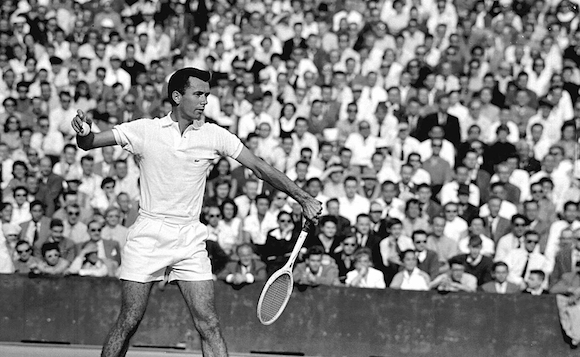
Both the men’s and women’s singles winners in 1958 were unexpected…
Mervyn Rose, the Australian left-hander, first played Roland-Garros in 1950 and was a quarterfinalist in 1951. He reached the Last 8 again in 1954, the year he was the Australian singles champion, and was a Paris quarterfinalist again in ’55. The year before his victory, Rose was a semifinalist in 1957. In the 1958 Roland-Garros final he defeated Luis Ayala of Chile, 6-3, 6-4, 6-4.
His amateur career ended when he joined Jack Kramer’s 15-tournament Australia/Europe/North America “Ampol Open Trophy” tour in 1959.
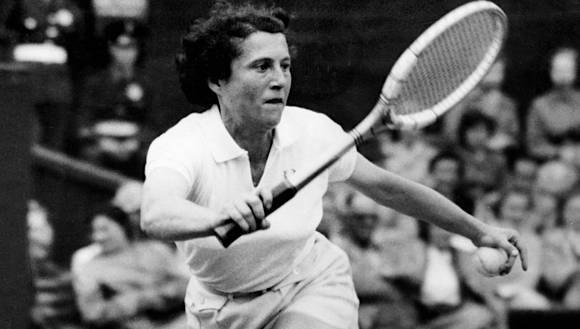
Zsuzsa Körmöczy first appeared at Roland-Garros the year Asbóth, her countryman, was the trophy winner… and “Suzy K” reached the quarterfinals. There was more to her spectacular debut than the result… Being Jewish and having faced discrimination as a young player, she had to flee her home in Budapest and go to Pély, a village 91 miles away, and spent WWII hiding from the Germans.
When hostilities ended, she helped build a tennis court to be able to practice and eventually returned to competition. A Roland-Garros contestant 12 times – steadiness off the ground, a resoluteness honed by life experiences, along with playing on her favorite surface, made her formidable.
She was semifinalist in 1956 and a quarterfinalist the next year before becoming the first Hungarian women to claim a Grand Slam singles title. Adding to the luster, she defeated the defending champion Bloomer, 6-4, 1-6, 6-2, and at the age of 33 and eight months became the oldest women’s champion at the time. József Somogyi, a former men’s standout, played a critical role maximizing her fitness for her Paris trophy run. She was also a Ladies semifinalist at The Championships in 1958 and reached the same position at Roland-Garros in 1961.
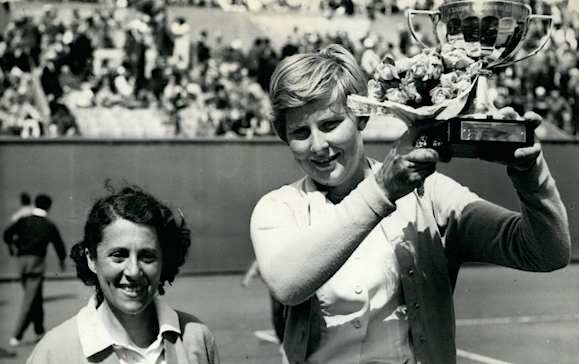
Christine Truman was the last every other year women’s champion from Great Britain. In the third of her seven appearances, the 18-year-old defeated defending champion, Körmöczy 6-4, 7-5 in the 1959 final.
In those days, fellow competitors were between 5’4” and 5’6”, Truman was different… she played to her height which she claimed was 5’ 11 ½” instead of her actual 6’. A three-time Roland-Garros quarterfinalist in 1958, ’61 and ’64, she attacked relentlessly using a point-winning forehand, a slice backhand, a telling serve and strong volleys to win matches.
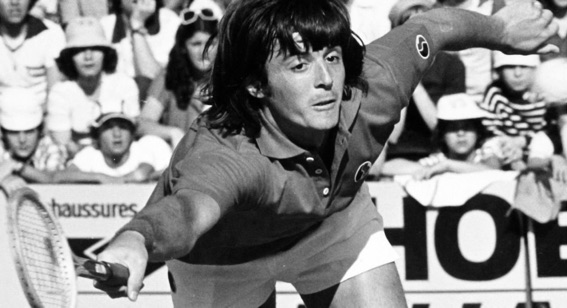
Beginning in 1969, Adriano Panatta played Roland-Garros 14 consecutive years. A semifinalist in 1973 and ’75, the charismatic Italian became the first of his countrymen to win an Open Era major. (As mentioned, Pietrangeli was the 1959 and ’60 winner.)
In the 1976 Men’s Singles final, Panatta defeated Harold Solomon of the US, 6-1, 6-4, 4-6, 7-6. In the quarterfinals, he earned his second Roland-Garros career triumph over tournament icon Björn Borg, 6–3, 6–3, 2–6, 7–6.
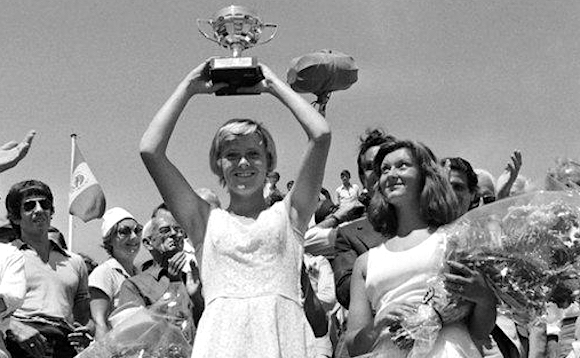
Sue Barker of Great Britain began a woman’s “Des Surprises” trifecta in 1976, followed by Mima Jaušovec of Yugoslavia in ’77 and Virginia Ruzici of Romania in ’78.
Barker was Mortimer-like, making only five career appearances at Roland-Garros. Her best showing prior to her 1976 victory was a third round stop the year before she triumphed. In the trophy round, she escaped with a 6-2, 0-6, 6-2 almost sleight of hand score-line win over Renáta Tomanová. The Czechoslovakian, having been a 6-2, 6-2 finalist to Evonne Goolagong, and with Lesley Turner Bowrey, a finalist to Goolagong and Helen Gourlay in Australia, was Slam impressive in ’76.
Jaušovec, the teeny 5’3” Yugoslavian defeated Florența Mihai of Romania 6-2, 6-7, 6-1 in 1977.
Beginning in 1974, she played Roland-Garros fourteen consecutive years and was a finalist in ’78 and 1983. As a youngster she was coached by Serbian legend Jelena Genčić, who guided many promising talents, including Novak Djokovic.
Tennis trivialists will appreciate 1977’s special chapter in Roland-Garros history… Iván Molina of Columbia and Florența Mihai of Romania were 7-6, 6-3 Mixed Doubles finalists to John McEnroe and Mary Carillo, the neighborhood friends from Douglaston, New York.
McEnroe’s tournament accomplishments will never by matched since he won the Boys’ title defeating Ray Kelly, the Australian Boys’ championship, 6-1, 6-1, and after Qualifying reached the Men’s Singles second round before losing to Phil Dent of Australia in five sets…and this was all before the 18-year-old Qualified at The Championships and was a semifinalist to Jimmy Connors, an “Only McEnroe..” performance by an amateur qualifier in the Open Era.)
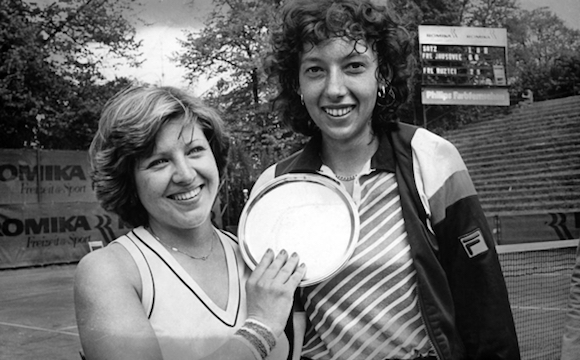
Jaušovec was a 6-2, 6-2 finalist in 1978 to Mihai’s fellow Romanian Virginia Ruzici. The singles opponents combined to win the Women’s Doubles defeating Gail Sherriff Lovera of France and Turner Bowrey, 6-4, 6-3. Ruzici’s potential Roland-Garros trophy sweep ended when she and Patrice Dominguez had to retire against Pavel Složil and Tomanová after losing the first set 7-6 in the Mixed Doubles final because the Frenchman injured his back.
After she finished playing, Ruzici moved into tennis management and guided 2018 Roland-Garros Women’s Singles champion Simona Halep’s career until 2022.
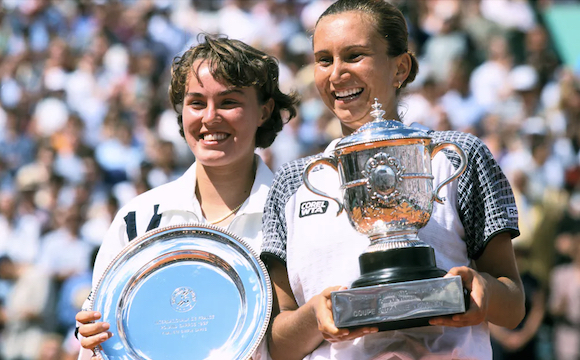
Iva Majoli of Croatia, a 10-time participant, was a quarterfinalist in 1995 and ’96. Then she amazed the tennis world defeating Martina Hingis, 6-2, 6-4 for the title. The victory was even more impressive because it was the first of the Swiss standard-setter’s two finals quests for the Suzanne-Lenglen Cup (as the Women’s Singles trophy was designated in 1979)… and Roland-Garros is the only major singles title Hingis never won.
Following her triumph, Majoli’s best showing was the quarterfinals the next year.
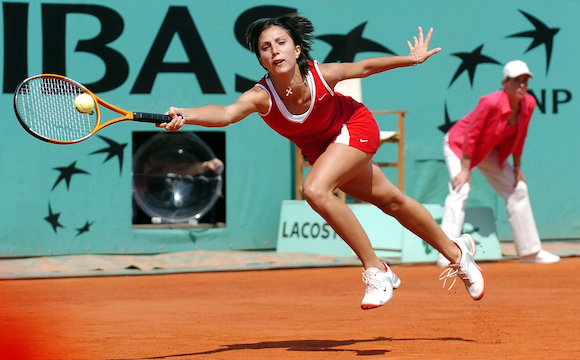
Anastasia Myskina’s 2004 success was staggering. Previously the Russian was credited with a second round result in ’03… then she demolished countrywoman Elena Dementieva, 6-1, 6-2 in the Women’s Singles final. In eight Roland-Garros visits, reaching the fourth round in 2006 was her next best performance.
The men staged a Roland-Garros trifecta when Albert Costa was the winner in 2002, followed by Spanish countryman Juan Carlos Ferrero in ’03 and Argentine Gastón Gaudio in ’04 … then Rafael Nadal turned the Men’s Singles into “His Championship…” winning 14 Coupe des Mousquetaires.
(In late February, French Federation President Gilles Moretton announced that after he and Tournament Director Amélie Mauresmo visited Nadal, in December at his home in Porto Cristo, Spain, to discuss honoring him, it was decided to hold “a very big tribute…” during this year’s tournament.)
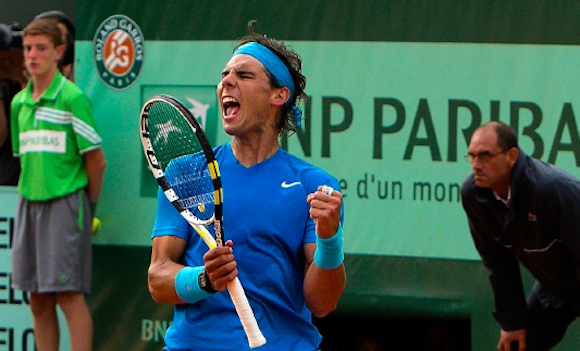
Costa was a Roland-Garros contestant 12 times making his debut in 1994. Following his 2002 victory, he made quarterfinal appearances in 1995 and 2000, and the semifinal the year after his title win.
When his playing career concluded, Costa became the Barcelona Open Tournament Director and in 2019, he took the same position with the Davis Cup when it was based in Malaga, Spain. He stepped down in 2022.
Ferrero, the man with three nicknames- “Junaki”, “JC” and “El Mosquito”, played the tournament 11 times… 2000 was his inaugural visit and he should have stopped competing after his first four years. He reached back-to-back semifinals, and the final in 2002, before claiming the title in 2003, 6-1, 6-3, 6-2, over the ultimate “Des Surprises” Martin Verkerk of the Netherlands. Since then Ferrero’s CV lists four third round showings, the last in 2010.
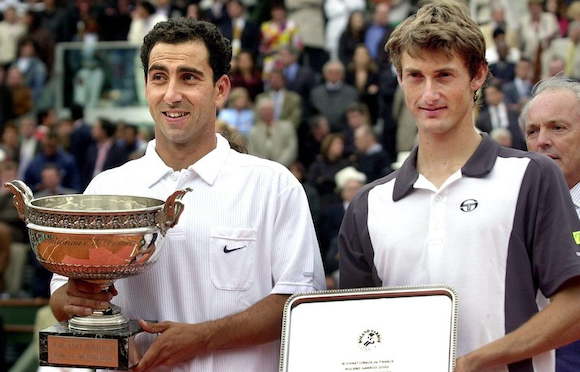
But the best was yet to come…in 2018, he began coaching a 15-year-old Carlos Alcaraz at his academy in Villena, Spain. Alcaraz’s four Grand Slam and five Masters 1000 titles, along with becoming the youngest player at 19 to hold the No. 1 ranking, in September 2022, defines Ferrero’s tennis playing/coaching legacy.
Gaudio made the first of his ten Roland-Garros appearances in 1999. Ranked No. 44 going into the 2004 tournament, his previous best showing had been a fourth round result two years earlier.
His 0-6, 3-6, 6-4, 6-1, 8-6 triumph over countryman and tournament favorite, Guillermo Coria was “Magnifique” … because he became the first man to win after losing the first set 6-0; the first man in the Open Era to win after saving match points; the fifth-lowest ranked player to win a major.
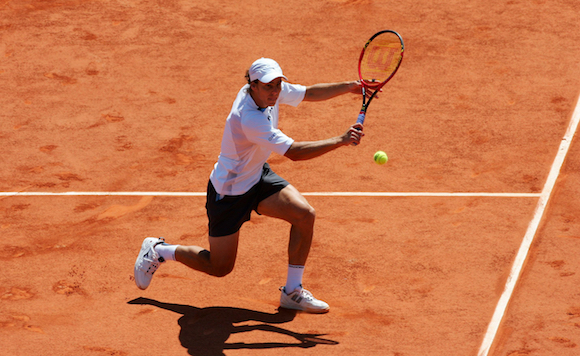
Following his victory, he reached the fourth round in both 2005 and ’06… but overall, his tour results were sporadic…Prior to his retirement in August 2011, he admitted, from time to time, contending with bouts of depression.
The second women’s Roland-Garros trifecta began in 2008 with Ana Ivanovic of Serbia’s victory, followed by Svetlana Kuznetsova of Russia in ’09 and the remarkable Italian, Francesca Schiavone’s in ’10.
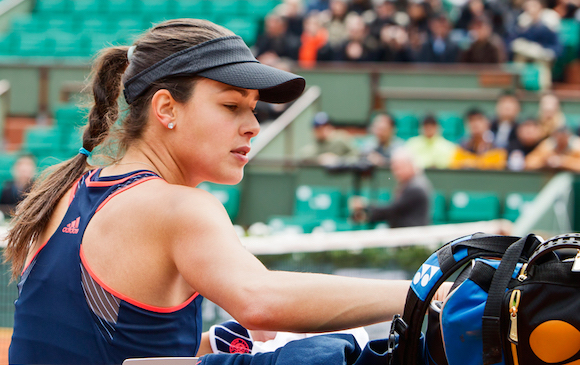
From 2005 until 2016, Ivanovic was annually in Paris the last week of May. She was a quarterfinalist in ‘05, and Justine Henin of Belgium raced past her 6-1, 6-2 for the women’s ‘07 trophy.
A 6-3, 7-5 Australian Open finalist to Maria Sharapova, the adidas Ambassador defeated Sharapova’s countrywoman Dinara Safina, 6-4, 6-3 in the 2008 Roland-Garros women’s title round… a semifinal showing in ’15 was her last significant result at a major.
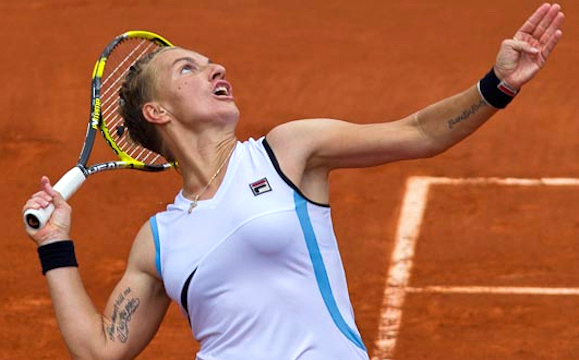
Kuznetsova’s 19 Roland-Garros appearances are “Standalone…” significant. In her fourth Paris stop, she was a 6-4, 6-4 finalist to Henin. A semifinalist in 2008, she downed Safina, 6-4, 6-2 in the 2009 championship round.
Roland-Garros is historic… and there is Schiavone.
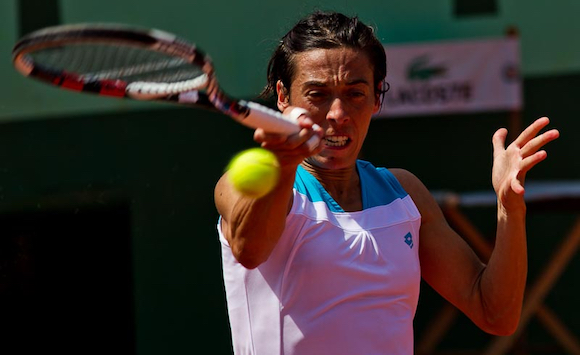
An 18-time competitor, she was a quarterfinalist in 2001, the first time she played and a first round loser in ’09, the year before she defeated Australian Samantha Stosur 6-4, 7-6 in a gripping final… the 2010 contest may have made everyone on hand (including me) an “Italian for a day…”. Known for being an upset artist and enormously popular on tour, in 2011, Schiavone was a 6-4, 7-6 finalist to Li Na, the first Chinese woman to win a Grand Slam singles title.
Schiavone was also a Women’s Doubles finalist with Casey Dellacqua of Australia losing 2-6, 7-5, 6-4 in 2008 to the Spanish pair Anabel Medina Garrigues and Virginia Ruano Pascual, who were also the ’09 champions.
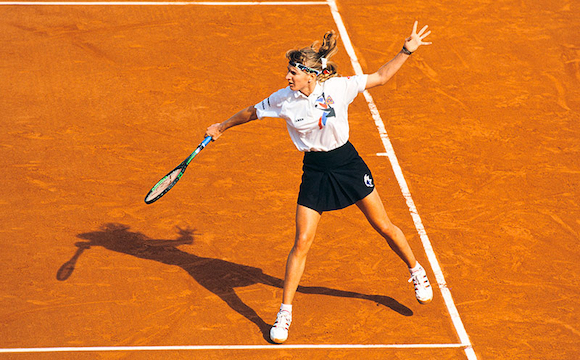
There are several other Roland-Garros “Des Surprise…” to include.
Stefanie Graf’s 6-0, 6-0 victory over Natalia Zvereva in 1988 was the most one-sided final in Grand Slam history. The champion lost a total of thirteen points and the contest finished in thirty-two minutes… and there had been a one-hour rain delay. (Having been on hand, I remember telling Hall of Fame journalist Steve Flink after the 17 minute first set, “This could get ugly…” and it did.)
And it should be mentioned that Zvereva who was listed as a competitor from the Soviet Union, was actually was born in Minsk, the capital of Belarus.
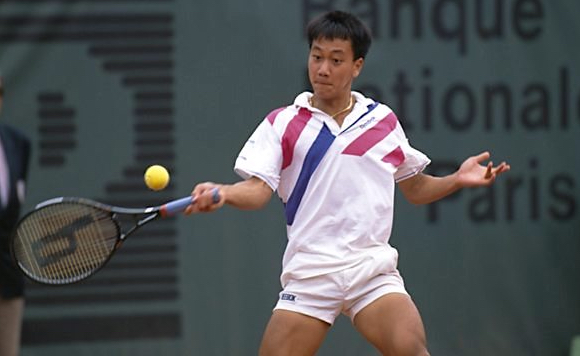
In 1989, Michael Chang endured a 6-1, 3-6, 4-6, 6-4, 6-2 title round trial against Stefan Edberg of Sweden to become the first American to win the Men’s Singles since Tony Trabert in 1955… in the fourth round cramping against Ivan Lendl of Czechoslovakia, he hit an underarm point winning serve, and went on to win in five sets.
At 17 and 109 days old, he became the youngest Grand Slam winner… while the world focused on the Tiananmen Square protests… the fact the Chang family is Chinese speaking Taiwanese, added to the impact of what took place in Paris.
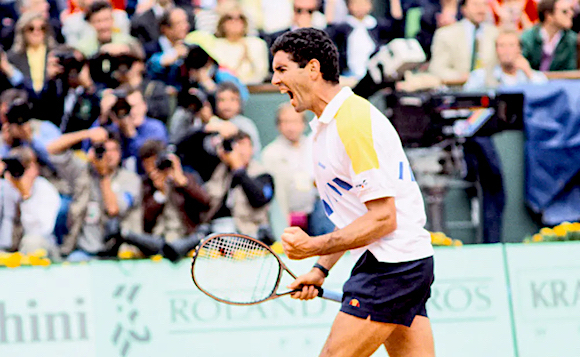
A year later, 30-year-old Andrés Gómez, in a result that was also amazing, became the first Ecuadorian to win a major, defeating Andre Agassi 6-3, 2-6, 6-4, 6-4 in the 1990 Men’s Singles title round.
Being Roland-Garros, there are sure to be “Des Surprises…” in 2025 which will follow in the Terre Battue footprints of those who have been discussed…
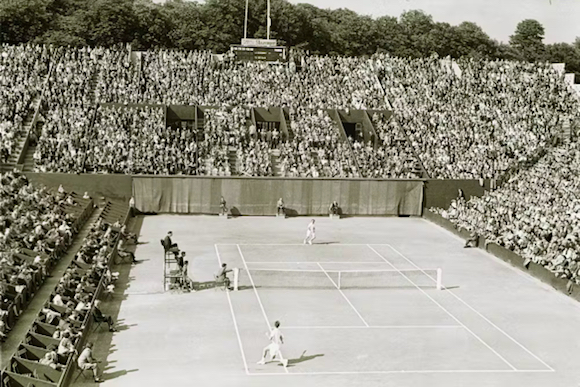
Title photo of Roland-Garros Court Central in 1953 by Gil de Kermadec / FFT