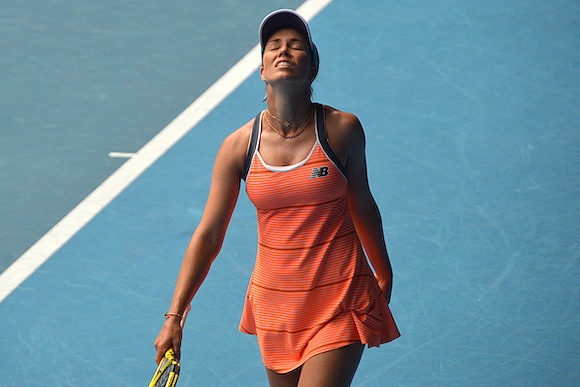
Kristaps Porziņģis of the NBA’s Golden State Warriors is 7’2”. Latisha Chan, the tennis doubles specialist who retired at this year’s Australian Open, stands 5’7”. Though there is a foot and seven inches difference in their height, they are matched. Both suffer from Postural Orthostatic Tachycardia Syndrome (POTS), an autoimmune disorder resulting in, among other things, heart rate fluctuations, lightheadedness, brain fog and balance issues, including difficulty standing.
Porziņģis was diagnosed in October 2025 while participating in the NBA with the Boston Celtics. Chan learned she had the disease in 2014, went on to survive 12 more years on the tour contending with the condition and won 24 titles, including the US Open with Martina Hingis in 2017. She topped the Women’s Doubles rankings for 34 weeks and with Ivan Dodig claimed the Roland Garros Mixed Doubles title in 2018. The following year they again won Roland-Garro and the trophy at The Championships.
As the new NBA season began October 20, POTS has left the 31-year old Porziņģis contemplating his future. On November 6, he announced he was taking time off from basketball due to the physical inability to play at the level to which he is accustomed.
The nature of tennis means competitors regularly face physical challenges. In this article, I will discuss some of the players currently struggling or who have struggled in the past with a variety of autoimmune issues.
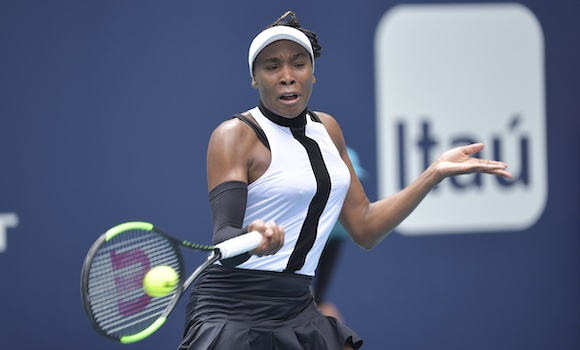
In 2011, Venus Williams was diagnosed with Sjögren’s syndrome. The announcement sent members of the tennis community scurrying to find “Harrison’s Principles of Internal Medicine” and learning that it is a chronic systemic autoimmune disease resulting in fatigue, joint pain, and immune dysfunction. The manifestations can appear similar to the systemic problems faced by those with POTS.
After her diagnosis, Williams won six WTA Tour singles tournaments the last one coming in 2016, to be her 49th overall. She also won the 2012 Olympic Doubles Gold Medal and Doubles’ titles at The Championships in 2012 and 2016 with her sister Serena.
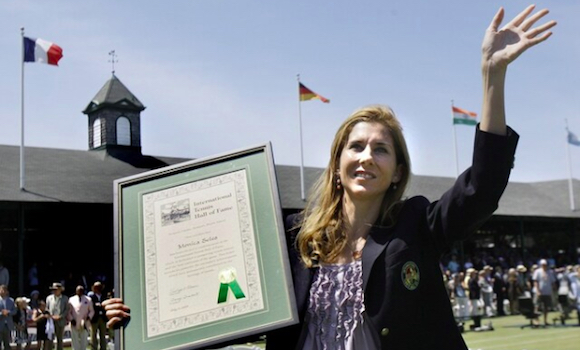
Monica Seles, a 2009 International Tennis Hall of Fame inductee, dominated the early 1990s winning eight Grand Slam singles titles by the time she was just 19 and 60 days old – a feat unmatched. She won nine singles Slams in her career. The Championships Ladies’ trophy was the only major she didn’t claim, but she was a finalist in 1992.
Many are aware that her father Károly, a talented cartoonist, drew pictures to make tennis fun for her. He also developed her distinctive two-handed playing style, (one which Frew McMillian and Gene Mayer had also used). His creative guidance resulted in her precious development. It included winning the Orange Bowl Junior Girls’ title at 11, attending the Bollettieri Tennis Academy in Florida, entering her first professional event at 14, and turning pro a year later. Magically it culminated when she became the youngest women’s Roland-Garros winner at 16 years, six months in 1990.
The first of the tragedies Seles faced occurred in Hamburg, Germany on April 30, 1993. In her Citizen Cup quarterfinal against Magdalena Maleeva, Günter Parche, a crazed Stephanie Graf fan – who the judiciary subsequently declared had a “highly abnormal personality structure” – stabbed her between the shoulders with a boning knife during a sit-down at the change of ends.
The wound took a few weeks to heal but the psychological damage was extensive and kept her away from competition for more than two years. Graf, who visited her while she was in a German hospital, became world No. 1 during her absence.
Seles eventually returned… played an exhibition against Martina Navratilova in Atlantic City, New Jersey on July 29, 1995… before winning the Canadian Open, her first tournament back, defeating Amanda Coetzer in the final.
(After the Rogers Cup victory, she added 19 more triumphs bringing her career total to 53 before she officially retired in February 2008.)
It was appropriate that Roland-Garros in 2003 where, in essence, her illustrious career began, was her final tournament… and she lost to Nadia Petrova in the first round.
Her total of nine grand slams could surely have been far greater if not for the attack on her in 1993.
Seles’ second tragedy happened late in the summer of 2022. After noticing lack of energy, general weakness and vision problems she was diagnosed with myasthenia gravis, a neuromuscular autoimmune disease. Three years after the revelation, in August 2025, she made the world aware of her health situation…
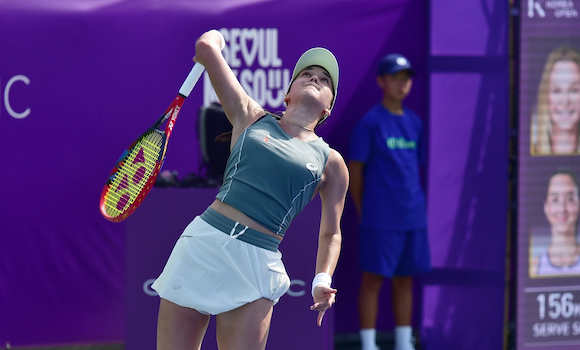
Danielle Collins, Eva Lys and Caroline Wozniacki have been hampered by the rheumatoid arthritis, an autoimmune disease that causes joint discomfort, stiffness and swelling.
Collins is in the multimorbidity category, meaning she is dealing with multiple chronic medical maladies.
After playing the 2019 US Open, it was discovered she had rheumatoid arthritis. Two years later she needed emergency surgery for endometriosis and had a cyst and tissue removed. During the 2025 Cincinnati Open, she suffered a herniated disc in her back, along with the same injury in her neck. In December she decided to take a sabbatical in early 2026… and it has extended through the entire year.
For Lys, the problem is more localized. Following her triumph at an ITF $25,000 in 2020, she learned she had spondyloarthritis which affected her spine… but didn’t reveal the diagnosis until March 2024.
Wozniacki was uncomfortable during both the 2018 Canadian Open and the US Open. That October she was diagnosed with rheumatoid arthritis. Following the 2020 Australian Open she revealed she would stop playing and start a family, after having married former NBA star David West in 2019.
In August 2023 she returned to the tour at the Canadian Open then went on to play the US Open. She made 14 tournament appearances during her comeback before deciding in late 2025, after the birth of her third child, that her playing days were over.
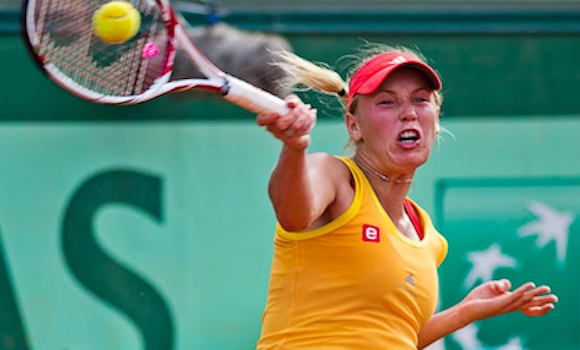
Unfortunately, autoimmune issues are as widespread as unforced errors.
Samantha Brown, an Ithaca College tennis player and a member of the school’s figure skating club team, was diagnosed with ankylosing spondylitis, an autoimmune condition causing pain and spinal inflammation. Forced to take over a two year playing hiatus, she returned to intercollegiate tennis in 2017 and concluded her career the following year.
Delaney Nothaft had been a member of the Santa Clara University women’s tennis team for two years before being diagnosed with myasthenia gravis. She didn’t play the 2019 season after learning the prognosis. She graduated in 2020 and because of the experience, plans to attend UCLA Medical School to further her understanding about the disease.
As a Toledo University freshman, in July 2024, JJ (Josie) Scholten was diagnosed with hypermobile Ehlers-Danlos syndrome (joint instability) but went on to win Mid-America Conference (MAC) Freshman of the Year accolades. In singles, she was 23-5 for the season, including an unblemished 17-0 in dual match record, which earned the neuroscience major First Team All-MAC honors.
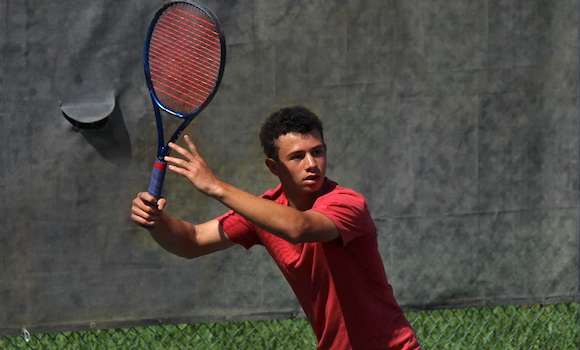
In 2021, as a 14-year-old, Jonah Chernett was deemed one of the top US intercollegiate recruits. Then suddenly he developed an unknown debilitation that made standing or walking difficult. An autoimmune or neurological muscle problem was suspected.
For four years, he consulted with many specialists across the country. After being prescribed Lyrica, a nerve medication, he was able to return to competition. He is now a freshman member of the University of Pennsylvania’s team.
It would not be a stretch to say that each of those discussed subscribed to Leonardo da Vinci’s belief, “Learning never exhausts the mind.”
Wozniacki has become a rheumatoid arthritis advocate. Involved in a global partnerships with the biopharmaceutical company UCB, she launched “Advantage Hers” which assists women between the ages of 18 and 45 living with chronic inflammatory diseases, including rheumatoid arthritis, axial spondyloarthritis, psoriatic arthritis, and psoriasis.
Williams and Lys continue to compete… so do Scholten and Chernett.
Seles quietly provides enlightenment about myasthenia gravis and Nothaft, as mentioned, is on her way to medical school.
Chan retired and although Porziņģis disclosed a pause in his NBA participation, he did not retire… He is contemplating his future.
…while countless other players make their way through the autoimmune maze.
Looking Ahead…
Four months before my eighth birthday, I became a Type I diabetic. In time I learned that Bill Talbert, in the late 1940s through the early ‘60s, and Ham Richardson during the ‘50s and 60s had this autoimmune problem yet became top US and international competitors. Thanks to my friendship with Tony Trabert, I had a lengthy relationship with Talbert.
Alexander Zverev became a Type I diabetic when he was seven. Having first watched him as a 17-year-old at the Gerry Weber Open in Halle, Germany, and understanding the intricacies of Type I diabetes, along with having been an “ordinary” player, I am planning a story that will provide unique insight about playing beyond the seemed restrictions of the disease as the Roland-Garros and the US Open champion, who finished the year as the No. 1 player, has done.
Title photo of Danielle Collins at the 2019 Australian Open by Vanessa Taylor