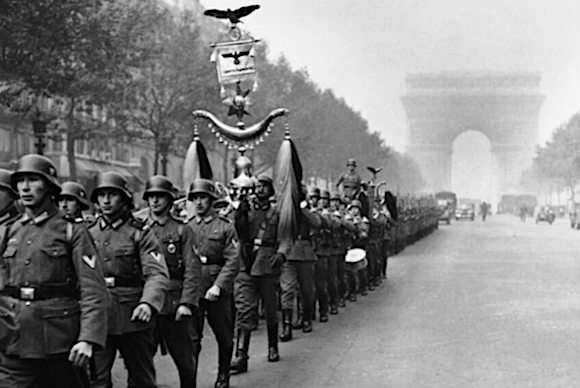
On May 10, 1940, Germany invaded France… Forty-two days later the French surrendered on June 22… On June 14, Paris had been declared an “Open City” and the “proof” was German troops parading down the storied Avenue des Champs-Élysées.
According to Albert Speer’s diary, he along with Hermann Giesler, Arno Breker and Joseph Goebbels, accompanied Adolph Hitler, during his brief visit to the city. The group was driven in a Mercedes along what has been called “the most beautiful avenue in the world” on June 28, 1940 (though June 23 has also been mentioned as the date).
The country’s capitulation brought about the creation of the French State. The Vichy Government, based in the same town in Central France, was installed.
WWI hero Marshal Philippe Pétain led the collaborationist regime that governed the unoccupied zone of France until the Germans took complete control of the country in 1942.
Having reached this point, readers are probably asking – What does this have to do with tennis?
Here’s the explanation…Having played then written about the game for decades, I have always been fascinated by the effects of WWII on Europe… which is the reason I have developed this story about the Fédération Française de Tennis and the country’s byzantine ways of dealing with the past…
Le passé est un fardeau
The past is a burden
During the Vichy period of control, Roland-Garros became the Tournoi de France… Supposedly it was restricted to French competitors and local club players… and was held in August, from 1941 until 1945, at the revered facility in Paris’16th arrondissement… When the city was no longer “The City of Lights…”
The claim that only the French participated is not accurate. True, the men’s winners were… But the women who earned trophies were an altogether different story.
Alice Weiwers, the Women’s Singles winner in 1941 and ’42 was from Luxembourg… and was a finalist to Simone Iribarne Lafargue of France in 1943. Lolette Payot, though she began representing France in 1937, is listed as Swiss having been born in Lausanne… She was the 1945 women’s champion.
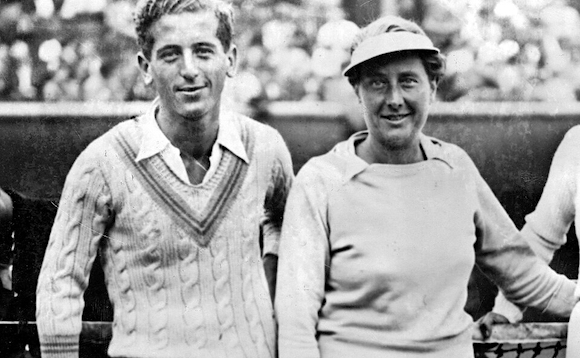
Records show that Weiwers was the Women’s Doubles winner in three consecutive years, 1941-’43, with French partner Cossette Saint-Omer Roy. She also was the Mixed Doubles titlist in 1941 with Robert Abdesselam of France and in ’43 with another French partner, Henri Pellizza (who was also a badminton star).
Bernard Destremau, the Tournoi de France Men’s Singles and Doubles champion in 1941 and ’42, had been a tank commander and was wounded before France’s surrender. Prior to his military service he was a Roland-Garros singles semifinalist in 1937, losing to tournament winner Henner Henkel who represented Nazi Germany.
Destremau was a singles quarterfinalist in 1936 and again in 1938, when he won the Roland-Garros Men’s Doubles with Yvon Petra defeating Don Budge and Gene Mako of the US, 3-6, 6-3, 9-7, 6-1.
Petra, who survived wounds and time spent in a prisoner of war camp, won the Tournoi de France Men’s Singles 1943-’45. He also was the doubles champion with Destremau in 1942, and with Marcel Bernard in ’43 and ’44.
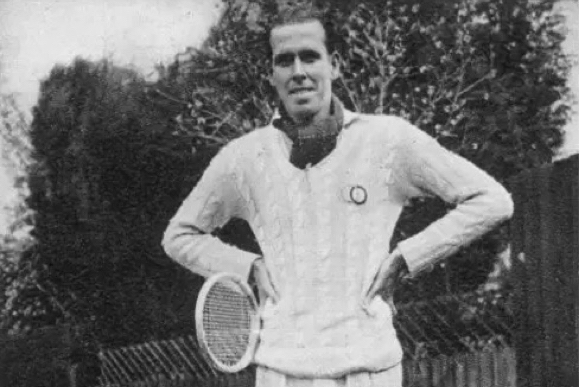
At Roland-Garros, Petra was the 1937 Mixed Doubles champion with Simonne Mathieu. Following the war, he was a singles semifinalist in 1946, the same year he was the Gentlemen’s winner at The Championships.
In ’46 he and Bernard survived an exhilarating 7-5, 6-3, 0-6, 1-6, 10-8 Roland-Garros Men’s Doubles final edging Enrique Morea of Argentina and Pancho Segura of Ecuador.
Several of the Tournoi de France women’s titlists had noteworthy results at Roland-Garros before the war.
Weiwers was a singles and doubles quarterfinalist in 1939 and in ’46 was a singles quarterfinalist again.
Adding to Iribarne Lafargue’s bona fides – though not achieved at Roland-Garros – in the spring of 1939, she scored a memorable 2-6, 6-4,6-3 victory over Simonne Mathieu in the Rivera Championships final (the tournament became Menton International Championships). The same year Mathieu claimed her second Roland-Garros Singles title.
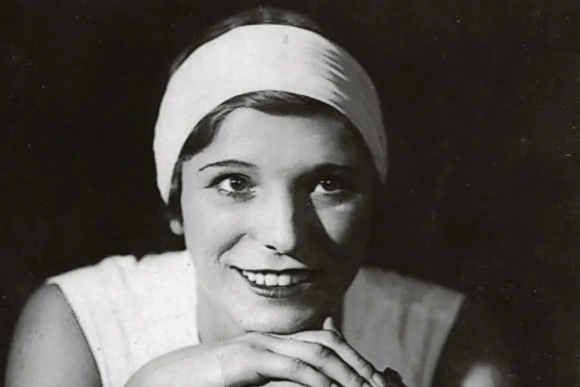
Payot was a Roland-Garros quarterfinalist in 1932 losing to Women’s Singles winner Helen Wills Moody of the US. In ’34, she reached the quarterfinals again and replicated her defeat of two years earlier losing to the tournament champion, in this case Helen Jacobs, in a gripping three sets. She was a quarterfinalist in ’35 and played true to form losing to Hilde Sperling, the Denmark/German competitor who defeated Mathieu in the Women’s Singles final.
In doubles, Payot was a semifinalist in 1933… in the 1935 Mixed Doubles final she teamed with Bernard to eke out a 4-6, 6-2, 6-4 victory over the French duo, André Martin-Legeay and Sylvie Jung Henrotin.
Le temps ne respecte pas ce qui se fait sans lui.
Time does not respect what is done without it.
– Paul Morand
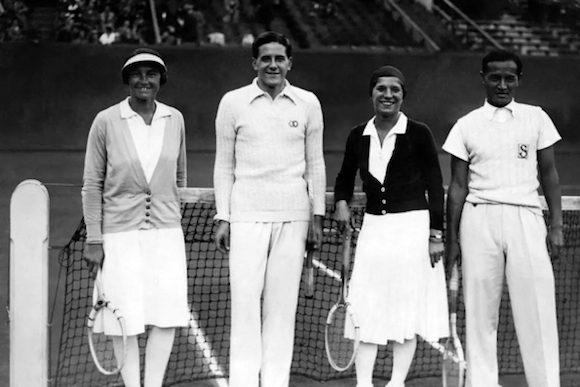
It has been 80 years and the Tournoi de France is fading into “forgottenness …” yet resistance to what was and appreciating the former champions’ efforts remains dogged…
Why?
There are a multitude of reasons for the resoluteness. Speculation includes – since the tournament took place during the Vichy period, acknowledgement of the champions would validate the time when collaboration occurred, (overlooking the fact that industrialist Charles Bedaux, automotive manufacturer Louis Renault and luxury goods empresario Louis Vuitton, along with Coco Chanel, were some of the successful French business people who supported the Germans)
It would be remiss to ignore the fact that areas of the country believed that German control brought order to the chaos that existed along with clarity about the place of the Jews in society. There were those who despised the Vichy puppet government but they loathed the Germans even more.
Attempting to simplify, the denial that continues is residual of the inability to contend with the complex reality of what France “was…” during the occupation.
The Fédération Française de Tennis has been unwavering throughout. According to doctrine, it does not recognize the winners of the Tournoi de France as official Roland-Garros champions because it took place during the German occupation of France. The Fédération views this period as a time when Roland-Garros was “Canceled.”
It is hard to fathom the continued resistance… particularly since many of the excluded Tournoi de France champions evidenced their talents at Roland-Garros before the war, yet are still not appreciated…
Eighty-years… The time has long past to stop disregarding them and honor these historic winners…
Sadly…
Plus ça change, plus c’est la même chose.
The more things change, the more they stay the same.
– Jean-Baptiste Alphonse Karr
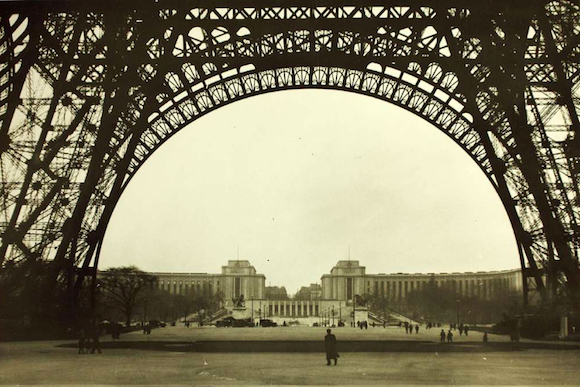
Title photo of the Eiffel Tower arch, 1941-1945 by itoldya420