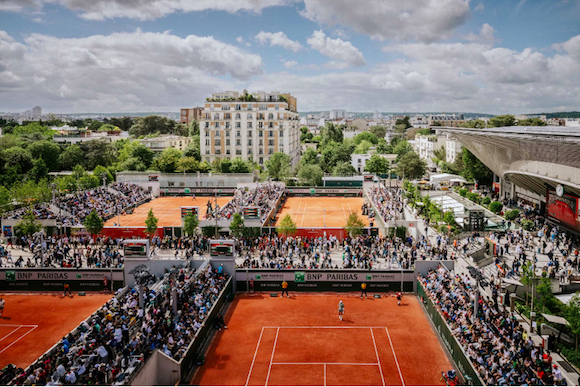
I am dedicating my 2025 Roland-Garros coverage to “Des choses qui restent”, the things that remain in my mind… after all that has been written about Carlos Alcaraz and Coco Gauff’s historic and mesmerizing singles triumphs…as well as the doubles wins of Marcel Granollers and Horacio Zeballos. “At last” … Men’s Doubles victory and Sara Errani’s “Double Espresso” success securing the Women’s Doubles with Jasmine Paolini and the Mixed Doubles with Andrea Vavassori…there are still items that remain… so, I will discuss some of the “Les bouts…”
“Merci Ritchie”
The “Ree’Shar” chants echoed throughout Court Phillipe-Chatrier as Richard Gasquet faced Jannik Sinner of Italy in the second round.
Playing with his customized lemon-colored Head racquet with the overwrap doubled but spread only the width of his hand and bottomed by an adhesive tape knob on the butt cap (which may be like ice hockey goalies who use a knob at the top to help them hold on to their sticks)… On his forehand, he “clamped” the handle with the first three fingers of his right hand to control the racquet while his fourth finger was on the knob and his pinkie below the knob. Gasquet’s grip was one of a kind…
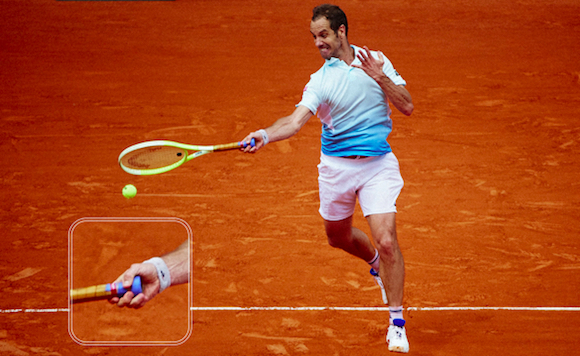
(When I first saw Gasquet’s grip, I was fascinated because during my playing days I had trouble with my grip slipping… then seeing Bob Lutz deal with the problem by reversing his grips and using the rough underside of the leather rather than the smooth side, I made the change…and it helped. I used a small wire bristle paint scraping brush to rough the surface once it became sweat logged… Then I transitioned to just wood… using a 4¾ or 5 inch size grip sans the leather and I found if I dried the handle on side changes the “grip slip” was reduced…in time, I returned to a conventional leather grip…always a Fairway, the crème de la crème of the leather grips… and always there was an adhesive tape knob on the butt cap.)
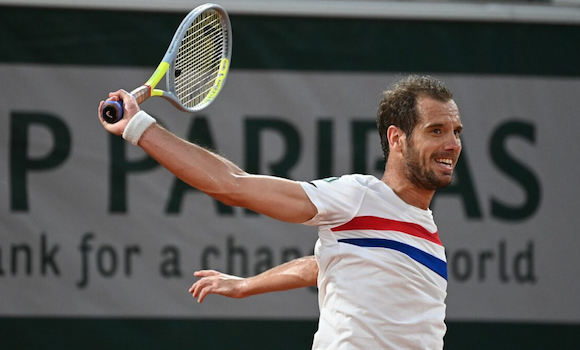
Gasquet was nicknamed “Little Mozart” as a youngster because he produced music with his majestic flowing one handed backhand. It was formidable… considered one of the best ever…a smooth and elegant point deciding stroke.
He won the Les Petits As, the celebrated 14s international junior tournament, in 1999 defeating Rafael Nadal in the quarterfinals 6-7, 6-3, 6-4 and Brian Baker of the US, 7-5, 6-3 for the title. He became the ITF Boys’ World Champion in 2002 after winning the Junior Singles at Roland-Garros and the US Open as a 15-year-old. It was a significant year for him because he made his ATP Tour debut at the Rolex Monte-Carlo Masters and defeated Franco Squillari of Argentina, 7-6, 3-6, 7-5 to become the youngest match winner since 1990 which is still a record…
(Historically, Gasquet was 15 years and 10 months, but Tommy Ho of the US was 15 years and 2 months when he won his first ATP match in August 1988 at the Rye Brook Open in Rye Brook, New York.)
He became the second youngest Roland-Garros Men’s Singles competitor when he debuted in 2002. He played the tournament 22 times… His best result was a quarterfinal in 2016.
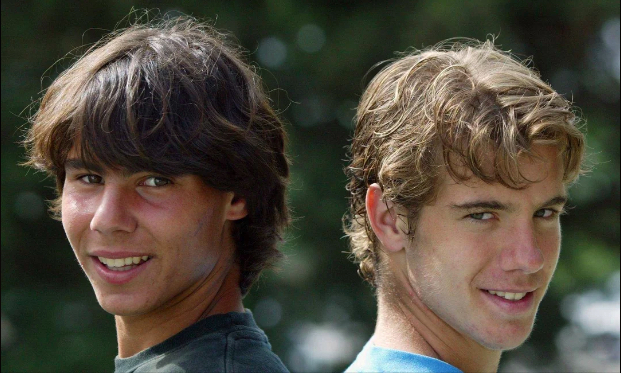
Nadal, who was born June 3, 1986, and Gasquet on June 18 the same year, first played on tour at the St. Jean de Luz Challenger in 2003… Nadal had to retire after losing the first set 6-2 and Gasquet reached the semifinals. That was his only ‘victory’ against the Spaniard in the pro ranks in 19 matches (although the ATP Tour does not officially count it in the duo’s final head to head record due to its Challenger status and credits Nadal with an 18-0 career record against the Frenchman.)
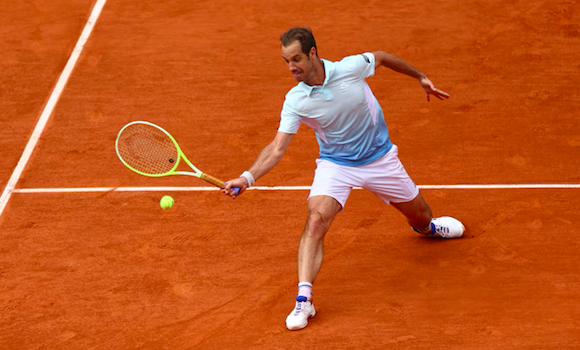
After his 6-3, 6-0, 6-4 loss to Sinner in the second round, Gasquet admitted, “It’s a little strange that it’s over. I wouldn’t be able to state the contrary. It is strange to finish here, because I haven’t really taken it all in yet. But I’m happy, happy to finish at practically 39 years old. I couldn’t have dreamt of a better end, because, you never know what could happen on your last tournament
“So, to finish today on Chatrier against the No. 1 in the world, it’s a wonderful end for me. It’s a little strange, because there is no stress tomorrow. There is no recovery. There is no training. There is no lawn tennis. So, this is the most astonishing thing. I’ve got my mind just telling me that I’ve got to recover and rest. But I’m very calm about the decision, and I’m very happy to stop today on this court against the No. 1 in the world, the stadium, the court was full. It was good weather. I’m very happy.”
He continued, “I’m very happy to finish my career and not to be massacred completely. I’ve still got a lot of pain. I’m quite fatigued. But I know that I have a good life, I’m going to be able to do other things. I’m not suffering. Some tennis players finish their careers in bad health. I have played for a lot of years, and I’m very happy to be able to have done so, winning some matches and finishing in the second round here.
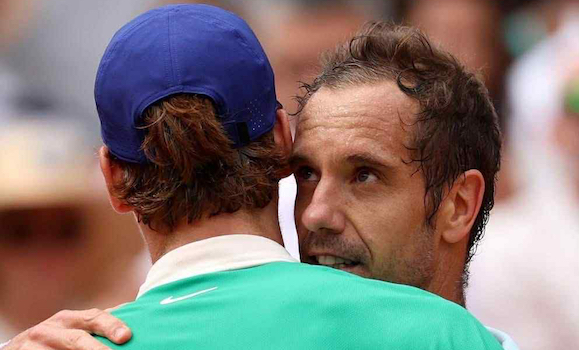
“I’m happy to have not finished on a ridiculous note. You know, Monaco, I won a match. Here I won a match, as well. Things have gone well for me. In any case, I have managed the end of my career really well. I’m happy to have played all these tournaments, and now you’ve got to know when to stop. This is the right moment. I have gone down the rankings. I have had a lot of injuries this season.
“People never know when to stop. It’s never easy. But in any case, to stop today on this court, you know, in good weather, it was wonderful.”
Gasquet, who was born in Béziers, France and resides in Neuchâtel, Switzerland, won 16 singles titles and reached No. 7 in July 2007.
Nadal, who shared photos of them in their younger days, wrote on Instagram:
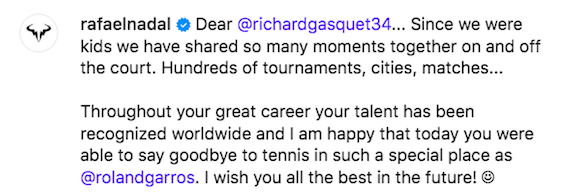
Following the match with Sinner, he was saluted and received a standing ovation. His career was summarized on the scoreboard and there were messages from Sinner, Nadal, Alcaraz, Novak Djokovic and French compatriots Gaël Monfils, Jo-Wilfried Tsonga and Gilles Simon. Fédération Française de Tennis President Gilles Moretton and Tournament Director Amélie Mauresmo presented a trophy.
Members of his team donned “Merci Ritchie” T-shirts which perfectly summarized the atmosphere on Court Philippe-Chatrier.
Adieu Caroline
Caroline Garcia’s final Roland-Garros appearances reminded me of “Fare Thee Well” … Dink’s Song, named for an African American woman named Dink, who John Lomax, an ethnomusicologist, recorded singing it in 1909 as she washed her husband’s clothes in a tent camp of levee-builders on the bank of the Brazos River, near Houston, Texas.
If I had wings like Noah’s dove
I’d fly the river to the one I love
Fare thee well, my honey fare thee well
Je volerais la rivière vers celui que j’aime
Adieu, ma chérie, adieu
Like so many French players, Garcia had to contend with expectations. As a junior she was a semifinalist at Roland-Garros, the Australian Open and The Championships, and a finalist at the US Open in 2011…the same year she made her Women’s Singles debut as a wild card and in perhaps a career defining moment, led Maria Sharapova, 6-3, 4-1, 15-0 in the second round then lost 11 consecutive games.
Born in Saint-Germain-en-Laye, Garcia, who lives in Lyon, was a Roland-Garros competitor 15 times… a quarterfinal appearance in 2017 was her best singles result.
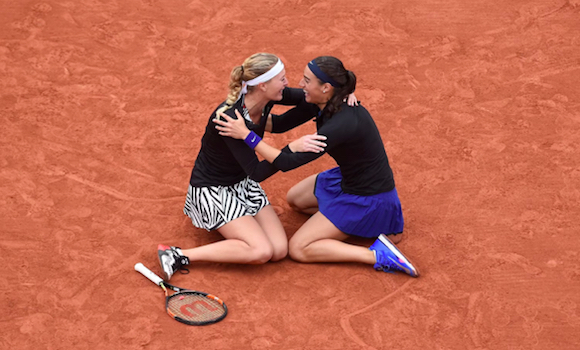
In 2016, she teamed with Kristina Mladenovic to defeat Ekaterina Makarova and Elena Vesnina, the Russian partners, 6-3, 2-6, 6-4… becoming the first French duo to win the championship since Gail Sherriff-Chanfreau and Françoise Dürr in 1971.
Fare thee well, my honey, fare thee well
Adieu, ma chérie, adieu
As was the case the first time she played Roland-Garros, this year Garcia needed a wild card to gain a spot in her final Women’s Singles but the result – a 6-4, 6-4 loss to Croatian American Bernarda Pera – wasn’t comparable to her first showing in 2011…
Garcia said of her pre-match emotions, “I don’t know if I was trying to control myself or if I was letting myself go. I wasn’t really expecting that to happen when I went into the corridor. I don’t know if it was a good or a bad surprise. But I really wanted to live this moment intensely with all of the emotions I was going to have. I didn’t know how things were going to roll out, but it was emotional getting ready to go onto the court and knowing that it was maybe my last match in Roland-Garros.”
She continued, “Sometimes I was frustrated with myself, because I was missing…timing or my game or my anticipation or my speed with my footwork, and I wanted to do more. Sometimes it’s a little frustrating to see what I did today, but I was clear about all of this before the beginning of the match, and I wasn’t expecting miracles, even though you helped, because it was just too much for me physically. Then when I was discussing with the public (after the match) and having the support of the public during the match, it was wonderful, and it warmed my heart to have their love and support and respect for my career.
“But in any case, I was happy that it was on that court, on Suzanne Lenglen, with a lot of public…I mean, obviously was very special for me… I had the chance to play many times in Roland-Garros in front of the fans, but obviously today was very special moment for me, and I really enjoyed it the most as I could…”
A tournament wild card in 2022 resulted in a triumph as she and Mladenovic defeated Gauff and Jessica Pegula of the US 2-6, 6-3, 6-2 to win the Women’s Doubles trophy for a second time.
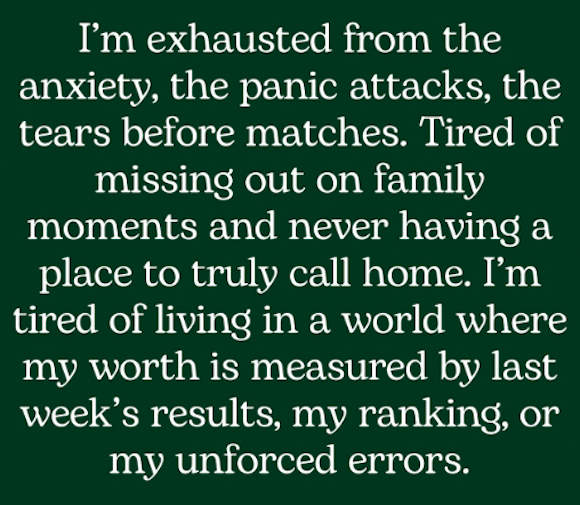
Since “The Naomi Moment” at Roland-Garros in 2021 when Osaka withdrew admitting she had been dealing with depression and anxiety in life acerbated by the need to do media interviews, there has been an awakening.
In 2022, the continuing pain in Garcia’s right foot and the resulting dismal performances combined to bring about bulimia nervosa. She candidly discussed overcoming the eating issue along with the mental health impact it had. Garcia cut short the 2024 season to heal a lingering shoulder problem and her continued anxiety issues and panic attacks.
Muddy river runs muddy and wild
La rivière boueuse coule boueuse et sauvage
After her singles match against Pera, she discussed the problems faced in recent years, saying, “I think that 2023 was a hard year for me…It was very difficult for me to find the good balance with tennis and to have a healthy relationship. Each time there was a lot of tension, frustration, and expectations, lots of black things cropping up at once that affected my life. Even everyday little things. So, it was quite a hard moment, and I tried to find a solution to strike a better balance and to do things differently and to have different objectives and goals. But it took me some time.
“Last year everything was too much, and I had to stop. I wanted to stop at the beginning of the season, but then I just wanted to play the Olympic Games, so I kept on until September. But I needed to get a breath of fresh air in order to realize certain things.”
Garcia went on to explain, “…It was not because of the last couple of months’ new pain…It’s not super related. I felt it was important sometimes to share about what kind of pain and what you have to endure when you’re a pro athlete. Obviously, you understand that the most important goal of sport is to push your limit, to go further and further, but there is sometimes body limit and also what are you able to live with on the moment during your career, and some days it’s easier than others to deal with pain, and sometimes it’s more complicated.
“Also, what about the pain that you may feel after your career or to live a normal life and things like that. I think when you’re injured as an athlete, there is the kind of injury and pain that doesn’t allow you to do your sport, but you can live a normal life. For example, when I had my shoulder (injury), I could live a normal life, I could go running, to the gym, and everything. But with the back pain (in 2017 and again this year), it’s a struggle and you’re in pain every single day, every single minute of your day, and you’re, okay, maybe it’s not completely worth it at the moment. So, I think it was important to share, and people, I don’t think, they always realize it….”
Along with her polished movement and good hands… collectively these skills made her a very good doubles player.
Fittingly, Garcia also participated in the doubles in her final Roland-Garros…she and Diane Parry received a wild card and defeated Miyo Kato of Japan and Aldila Sutjiadi of Indonesia 6-4, 6-2 in the first round…then overcame Makato Niomiya of Japan and Tang Qianhui of China 3-6, 6-4, 6-2. Mirra Andreeva and Diane Shnaider of Russia, the No. 4 seeds, ended the Garcia and Parry show, 6-0, 7-5 in the third round.
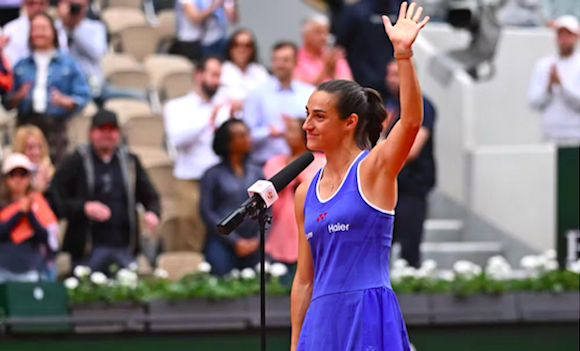
Following the loss, Garcia offered, “This was a difficult match. They were seeded No. 4. They had excellent results over the last season, so it wasn’t easy to find a rhythm in the first set because they were playing right on the spot all the time. So, after a while obviously we wanted to do better and we just wanted to have a good time with the public, as well… we came back, and there were a lot of strong emotions for me to be in the Simonne Mathieu for my last appearance here at Roland-Garros. So, yes, a lot of emotion, but I think it’s pretty normal.”
She added, “So many things have happened since I came to Paris two weeks ago. So many emotions. And after my last game in women’s singles, I had just two days where not much happened. I just had to rest, and I was really happy to be able to be back in doubles and have those two small victories. Well, after the match on the Lenglen is probably my strongest memory.”
Looking back, she said, “I can’t really talk about the other athletes, other tennis players. I can talk about my experience. Sometimes it’s true that I had a hard time trusting myself, and sometimes obviously it was hard to…am I really in big pain or maybe just my mental stress sending me message that I’m in pain and I cannot play just because maybe I have some fears.
“For me it was always okay, unless I cannot walk to the court, maybe I can play, and we never know what can happen out there. Maybe the other one is in worse condition than I am. Obviously most of the time it will not happen, but maybe someday you will have a win that you are not expecting, so you keep it in your mind, and you’re, like, oh, maybe it can happen again. Then obviously, the ranking system… if you don’t play, you will drop in the ranking, so you cannot give it a try. I probably did some mistake in my past… I’m not fit enough to play, maybe a should skip a month of tournaments and really recover, rest, rehab, and come back when I’m 100%. I probably played too many tournaments when I was not, like, 90 or 100%. But sometimes you feel like the responsibility of your team also, and if I can still walk, maybe I can play tennis.”
Given the severity of her injuries, she was asked about using painkillers and Garcia responded, “…that’s the thing about sport. You are supposed to push your limit and get stronger, faster, be able to last longer on court. You have to find your own limit, and sometimes it’s true that anti-inflammatory painkiller or things like that can help you to go a little bit farther and make those pains a bit more silent than they really are. After, it’s like everyone with their conscience, and because taking them you can get your injury worse, so you have to see the whole picture and see the time now and also the longer term. So. it’s their own decision. Obviously, like I said, I think probably sometimes I played tournaments I should not have played because I was in too much pain, and in the longer term also mentally was too tough to deal with it. It’s draining to play with pain. It’s hard to enjoy those moments. So, maybe sometimes I didn’t trust myself enough.”
Having said before the tournament that this would be her final Roland-Garros, Garcia admitted, “I’m going to go to Queen’s, because it’s the first year that the girls would go (for the inaugural female version), so it’s a motivation for me.
“Then I would like to go to Wimbledon. Depends on my ranking, of course, because I went down in my ranking. Depends, if I have a wildcard or not. And then US Open…”
The eleven time WTA tournament winner, who reached a career high No. 4 in September 2018, put her Roland-Garros decision in perspective, saying, “…It’s part of our life. If you’re a professional player at some point you have to turn the page, and you have a lot of memories. There are so many wonderful moments I have lived here, but I have so many more to live.
Fare thee well, my honey, fare thee well
Adieu, ma chérie, adieu
Blessé et Blessée…
Injuries are a given at a major, but Emil Ruusuvuori was sidelined before getting on court. The Finn was supposed to return to competition and play Aleksandar Kovacevic of the US in the first round but withdrew. He had been dealing with mental health issues from July 2024 until February of this year and had slowly made his way back, having written on Instagram, “I didn’t touch a tennis racquet in four and a half months. I simply couldn’t go on the court.” And it seems that he was still unable to overcome the panic issues that had been consuming him.
Gabriela Dabrowski, who forms one of the world’s best doubles teams with Erin Routliffe of New Zealand, was absent concentrating on her recover from breast cancer treatment. In April 2024, the Canadian revealed she had been diagnosed and was undergoing treatment, before taking a break from tennis to have two surgeries. While being treated, she continued to play, but decided to spend the time away from Paris focusing on regaining her health.
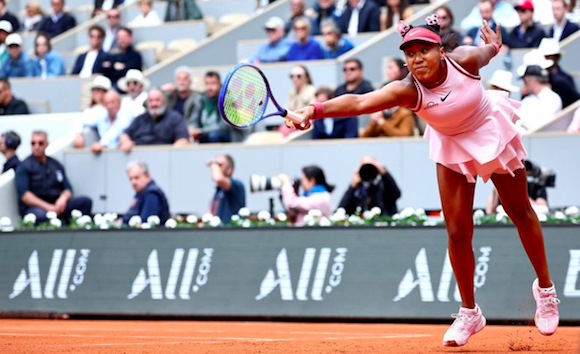
Naomi Osaka played… and lost 6-7, 6-1, 6-4 in the first round to Paula Badosa of Spain. After the match the Japanese star was emotional during her press conference. Initially asked about having a problem with her hand, she said, “Since Rome, I have had blisters on my hands. I think it’s the friction of clay because I don’t have blisters on any other surface.”
She went on to offer, “I think as time goes on, I think I should be doing better…I hate disappointing people. Even with Patrick (Mouratoglou), I was thinking just now, he goes from working with, like, the greatest player ever (Serena Williams) to like, what the f–k this is.”
Three days after the match, Osaka posted on Instagram a photo of her swollen and blistered left hand noting, “I genuinely cannot bend these fingers all the way…”
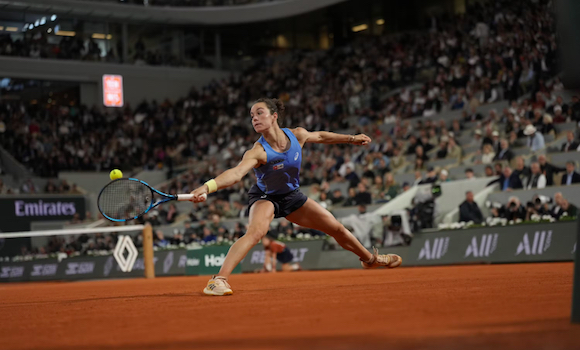
Loïs Boisson, the forehand bludgeoning, powerfully built woman, was the story of the tournament for French tennis. Ranked No. 361, she needed a wild card to gain entry and played her way to the semifinals… In 2024 she also received a wild card but in May, just before the tournament, she tore the anterior cruciate ligament in her left knee in an ITF tournament match against countrywoman Fiona Ferro…
She had surgery and spent nine months recovering returning to competition in February this year. She needed a wild card from the ITF to enter the $75,000 Saint-Gaudens, France event in May and won it, ranked No. 513…..In 2021, she had a significant right shoulder injury that necessitated a major stroke change to reduce further damage… and the new mechanics resulted in a heavy, biting topspin forehand. Mary Pierce in 2002 was the last French wild card to reach the Roland-Garros women’s singles quarterfinals. Boisson bettered Pierce’s effort, matched countrywoman Marion Bartoli’s 2011 semifinal finish …and was the lowest ranked player in the last 40 years to reach the last Four…
… After her Roland-Garros performance she certainly deserved a “Boisson” (drink) …
Matchs de nuit…
If there is one thing consistent about Roland-Garros it is the Court Philippe-Chatrier night scheduling. It always leads to thorny discussions, particularly as since 2021 when night sessions began, there have been 52 sessions…and women were in the spotlight on only four occasions.
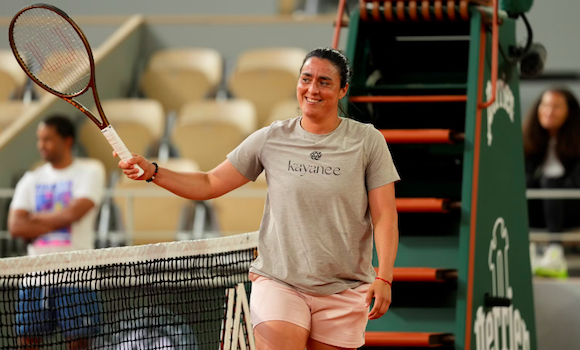
After losing 7-6, 6-0 in the first round to Magdalena Frech, Ons Jabeur went to social media and offered a pointed criticism of the tournament’s approach… a day after Fédération Française de Tennis President Gilles Moretton said, “The schedule is one key point on the tournament. Sometimes we have to think about what could be better for spectators. That’s why sometimes we have to make some choices.”
Jabeur thoughtfully responded…
“I’m not sure what kind of fans he’s talking about. I know I’m a fan. I will watch that match.
“You don’t have to agree, just read with an open heart…
“A lot of amazing athletes have been told the same things over and over. That no one watches. That no one cares. That women’s sport doesn’t ‘move people’.
“Judgment comes quickly often from those who’ve never even watched a full match. One empty stadium is held up as proof. The packed ones? Conveniently ignored. A missed shot becomes a headline. The hundreds of brilliant ones? Forgotten.
“Still, they show up. Still, they compete. Still, they carry a sport forward on their shoulders.
“When a woman wins 6-0, 6-0, it’s called boring. Too easy. When a man does it? That’s ‘dominance.’ ‘Strength.’ ‘Unstoppable.’
“When women play with power, they’re told they ‘play like men’. As if strength, speed, or aggression don’t belong in a woman’s game.
“If they celebrate, they’re dramatic. If they don’t, they’re cold. Too emotional. Too distant. Too loud. Too quiet. Too much. Never just right.
“And yet the game itself keeps rising. Coco Gauff leads with fearless belief. Aryna Sabalenka strikes with unmatched power. Iga Świątek dominates with calm and precision. Jessica Pegula brings relentless consistency. Paula Badosa fights through every storm. Mirra Andreeva breaks through, young and fearless. Jasmine Paolini lights up the court with fire and courage. Elena Rybakina is composed and lethal. Naomi Osaka opened up about the battles off the court and kept showing up. Venus and Serena Williams broke barriers and then broke records.
“The game is full of stories. Of greatness. Of fight. Of grace under pressure. And still, many choose not to look. Not to listen. Not to care.
“But belief is not a requirement. Permission is not necessary. Respect may be delayed but progress isn’t waiting.
“So, when the headlines say, ‘no one watches,’ remember-full stands were just never part of their narrative.
“When the narrative says, ‘too easy,’ look closer: it took years to win that fast.
“And when someone says women don’t play with power, watch again and be honest this time.
“The game is not asking to be seen. It’s already shining.
“No one’s denying the greatness in men’s tennis. The fierce battles, the legacies, the magic under pressure.
“But honoring one side of the sport shouldn’t mean ignoring the other. The women’s game has been writing its own legacy loudly, brilliantly, and for far too long without full recognition.”
With respect🙏🏼
“A player who chose this racket out of passion, and honors every woman fighting for her place on the court❤️”
Tournament Director Amélie Mauresmo held a press conference to discuss Jabeur’s comments and responding to a query from Matthew Futterman of The Athletic concerning the message the women are receiving said, “It has never been that the girls are not worthy to play at night,” she said. “It’s never been this. I will not accept that you carry this message. That’s really clear to me.”
Then added, “The funny thing is it’s the same questions, year after year…” which resulted in an “…the answers are always the same…” response.
The Tunisian was courageous to step up and speak out but Jabeur is a voice in the wilderness as Mauresmo has stated that she favors men’s matches as Court Philippe-Chatrier features only one match per night, and men’s best of five sets matches would usually be longer.
An End… With Two Wins
Sara Errani’s singles career came to an end when she lost 1-6, 6-0, 7-6 to Anna-Lena Friedsam of Germany in the second round of the Women’s Singles Qualifying. That it happened at Roland-Garros was fitting …since the Italian was a singles finalist to Maria Sharapova in 2012 the same year, she won the Women’s Doubles with countrywoman Roberta Vinci.
She doubled again in 2025, teaming with Jasmine Paolini to defeat Anna Danilina and Aleksandra Krunic in the Women’s Double final and joining Andrea Vavassori to stop Evan King and Taylor Townsend of the US, 6-4, 6-2 for the Mixed Doubles title.
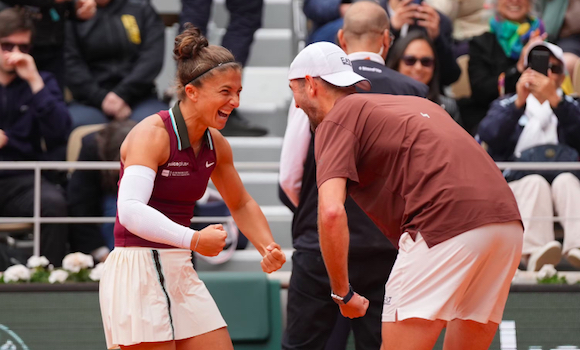
The two wins match Bethanie Mattek-Sands’s 2015 success with Lucie Safarova and Mike Bryan… and harken back to 2001 when Martina Hingis collected the Women’s Doubles with Anna Kournikova and the Mixed Doubles with Mahesh Bhupathi.
Prêter Attention à…
Horacio Zeballos of Argentina earned notoriety becoming at 40 the oldest player to win his first Grand Slam title… as result of the 6-0, 6-7, 7-5 victory with Marcelo Granollers over Joe Salisbury and Neal Skupski.
Niels McDonald earned attention downing Max Schönhaus in the Boys’ Singles final, 6-7, 6-0, 6-3. He became the first German Grand Slam junior singles winner since Alexander Zverev took the 2014 Australian Open boys’ title. Adding to the importance, both McDonald and Schönhaus are from Germany.
Lilli Tagger’s victory was historic… Not only was she unseeded, she became the first Austrian to claim the Girls’ Singles title, defeating Hannah Klugman of Great Britain 6-2, 6-0… and she didn’t lose a set.
Rareté
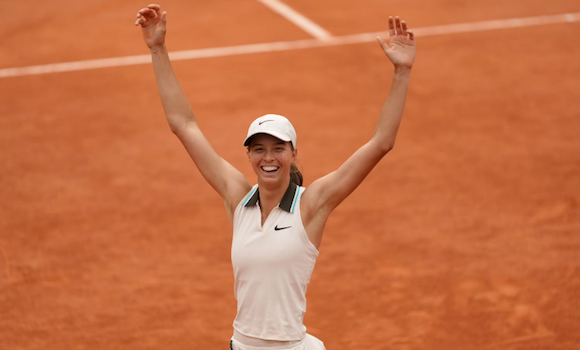
In a rarity, for the first time the winners of the “USTA Roland Garros Wild Card Challenge”, Emilio Nava and Iva Jovic won their opening singles matches at Roland-Garros. Nava defeated Botic van de Zandschulp of the Netherlands,6-2 7-5 7-5. Jovic edged Renata Zarazúa 6-3 5-7 6-4
Adding to the coincidence both players are from Los Angeles and remaining on theme both lost in the second round.
Les nombres…
The enthralling Alcaraz vs. Sinner Men’s Singles final lasted five hours and 29 minutes, the longest in Roland-Garros history. The Spaniard edged the Italian, 4-6, 6-7, 6-4, 7-6, 7-6 to become the sixth player in the Open Era to claim the Coupe des Mousquetaires after losing the first two sets… and the first to do it in a Match Tiebreak. He also saved three match points down, 0-40, 3-5 in the fourth set. This feat meant he joined Gaston Gaudio (2004 Roland-Garros) and Djokovic (2019 Wimbledon) as the only male players in the Open Era to win a Grand Slam final after saving match point.
A total of 385 points were played and Sinner topped Alcaraz, 193-192… Staggeringly remarkable.
Aryna Sabalenka’s 70 unforced errors in her 6-7, 6-2, 6-4 Women’s Singles final loss to Gauff were the most unforced errors committed in a women’s singles Grand Slam final match. It was also the highest number of unforced errors in any Roland-Garros Women’s Singles main draw match in 2025. Sabalenka won 100 points while Gauff collected 119 points, meaning she won 59% of her points on Sabalenka errors. Sabalenka apologized to her team for her performance… though paid scant respect to Gauff’s effort in the post match news conference.
Yannick Noah Day…
The traditional charity day, created in 1977 by Benny Berthet, a talented French player who was a German prisoner during WWII, and renamed Yannick Noah Day in 2023, took place on Saturday, May 24th with 23,000 attending.
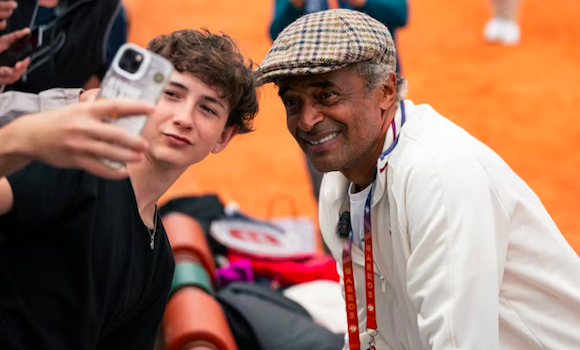
The highlight of the festivities took place on Court Philippe-Chatrier when Noah, along with Gaël Monfils and Jordan Thompson, entertained the spectators and played a doubles match with some of the ball kids. Adding to the ambience, they wore microphones and shared their enjoyment in what was taking place with those watching.
Sinner, Zverev, Stefanos Tstitsipas, and Alex De Minaur participated in other exhibitions. Having opportunities to watch tennis stars play for fun was the primary reason for Berthet’s charity day idea.
A wide range of activities were also staged including “Play With A Kid” which enabled youngsters who caught a tennis ball hit into the stands to come on court and “hit a few” after Sinner, Garcia and Gauff finished practice sessions.
“Play on Roland-Garros Clay”, sponsored by ENGIE, allowed some of the attendees to go onto Court 2 and experience what it was like to be on a court that would be used in tournament competition.
For the second consecutive year, in conjunction with Yannick Noah Day, Wilson donated 1,500 junior racquets and 400 tennis balls to charity organizations as part of a Fédération Française de Tennis initiative to promote tennis.
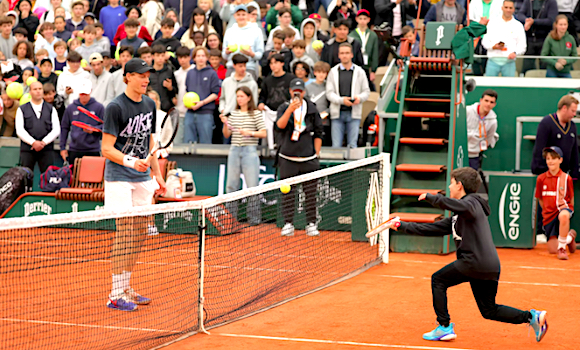
This year Yannick Noah Day raised a record setting $364, 627 which will fund Fédération Française de Tennis initiatives with affiliated clubs to help those from disadvantaged neighborhoods and to promote adaptive tennis, tennis for health, disability tennis and the environment, with the Solidarity and Environmental Action Awards. The event also supported the Fête le Mur charity, which works in disadvantaged areas.
During Opening Week, spectators were able to wander the grounds and soak up Roland-Garros’s engrossing atmosphere while watching the qualifying events and see top players practice. More than 102,000 tennis fans, another record, attended. This was a result of the $33.00 affordable ticket prices. In addition, thanks to the support of the tournament sponsor, BNP Paribas, those under 25 were able to purchase tickets for US$17.00.
There is no better way to conclude my objets divers, having written about a variety of things than with the individual whose name will always be mentioned when Roland-Garros is said… Rafael Nadal.
Homage To “The King Of Clay”…
“Rafa” chants rang out as he walked onto Court Philippe-Chatrier (while announcer Marc Maury – as he had for so many years – eloquently introduced him) 20 years to the day he made his tournament debut on the same court in a second-round match as an 18-year-old.
On May 25th 2025, the 15,000 seat stadium was full. Most were wearing Terre battue colored T-shirts with “Merci Rafa” and the date emblazoned across the front. Others in the crowd wore white T-shirts featuring”14 RG” (referencing his 14 Roland-Garros singles titles), and a representation of the La Coupe des Mousquetaires, the men’s trophy that he owned for so long.
Highlights played on the scoreboard before an emotional Nadal began to speak initially in French, saying, “Good evening, everyone, this is tough. I don’t know where to start after playing on this court for the past 20 years. Winning, losing – but especially being moved every time I’ve had the chance to be here.”
Nadal, who had a 112-4 tournament record, and has a magnificent statue on the grounds of Roland-Garros, also spoke in English and finished his comments in Spanish.
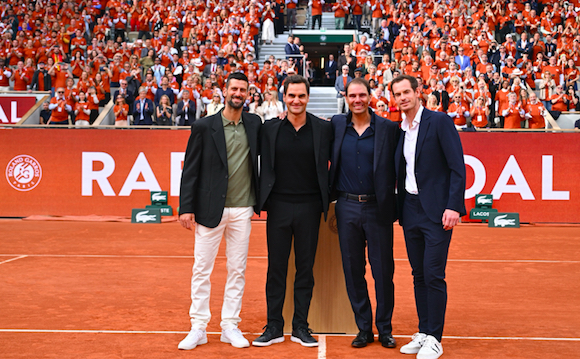
When Roger Federer, Novak Djokovic and Andy Murray, joined him on court, adding to the significance of the tribute, he was delighted because their appearance gave him an opportunity to explain the role the three had played in the player he became.
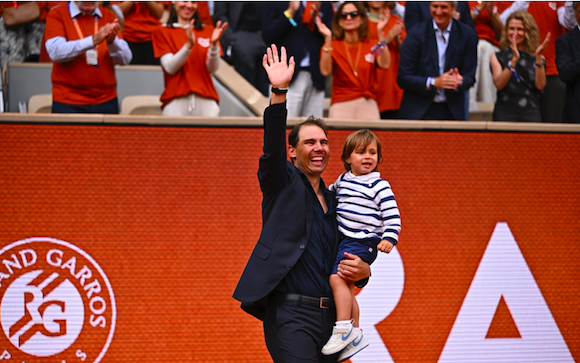
Carlos Alcaraz, the defending men’s champion, was in the crowd wearing a “Merci Rafa” T-shirt. Iga Swiatek, the 2024 women’s champion and a four time Roland-Garros winner, was also on hand as were former champions Carlos Moya and Juan Carlos Ferrero. His uncle and former coach Toni Nadal was there, as were Rafa’s wife Maria, and son Rafael.
The day’s “Vamos” energy was contagious as “Rafa” chants filled Chatrier almost matching the ovations that regularly interrupted the celebration.
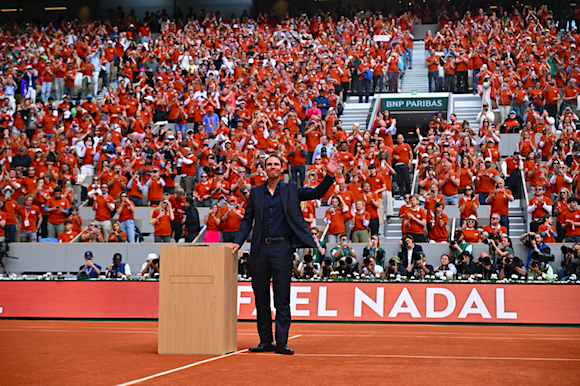
As the presentation came to an end, Gilles Moretton and Amélie Mauresmo, joined Nadal and called attention to an area in front of the umpire’s chair where, once the Terre battue had been swept away, it became apparent that a plaque bearing his signature, his footprint, the number “14” and a copy of the Mousquetaires trophy had been imbedded in the court.
In closing, while trying to remain composed, Nadal said, “Thank you, France. Thank you, Paris. You have given me emotions and moments I could never have imagined. You can never know how gratifying it is to be appreciated in the place that matters most …You made me feel like a Frenchman. I can no longer play in front of you anymore, but my heart and my memories will always be linked to this magical place.”
“The King of Clay” recognition was unforgettable… and a perfect way to conclude “Beyond The Trophies…”
Title photo of Roland-Garros by Pauline Ballet / FFT